.svg)

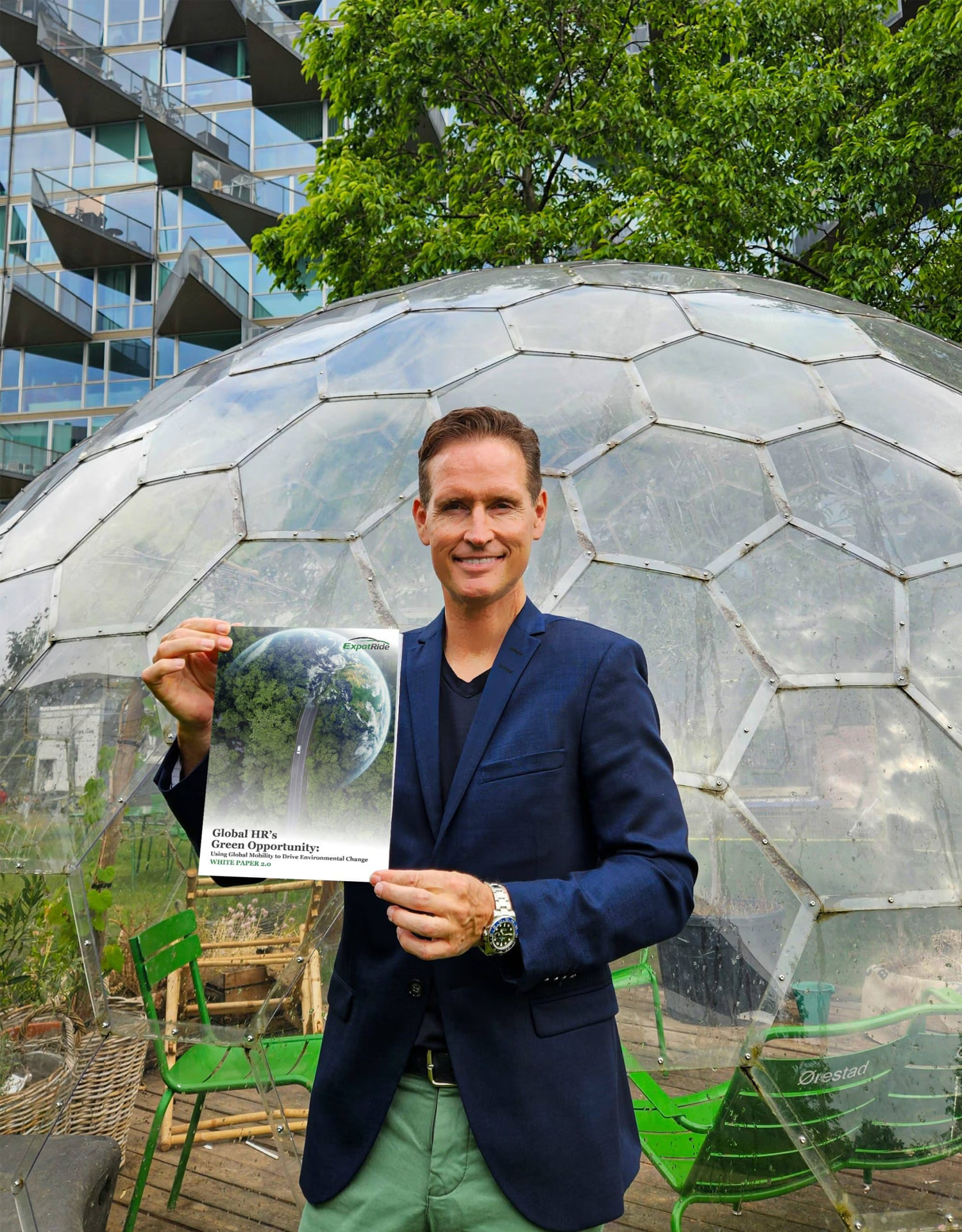
The corporate world has long recognized its role in environmental sustainability, particularly within global mobility. Policies are being created and people are getting more aware of the impact, the respective business operations and the relocation have on the environment. However, knowledge alone is insufficient; action is now what is needed.
With the backing of key industry organizations such as FIDI, WERC, EURA, IAM, and CHPA, the Global Mobility sector is ready to take significant steps toward coordinated sustainability efforts. And thanks to the back bone of the industry = RMCs, these initiatives can be effectively orchestrated, ensuring that businesses can reduce their carbon footprint and meet global sustainability standards. By developing tailored solutions and leveraging data-driven decision-making, HR departments within global mobility now have the mechanisms to guide employees toward more sustainable relocation options.
Encouraging Sustainable Choices
In locations where sustainable alternatives are available, the natural inclination might be to instruct assignees to choose these options. Therefore it is vital for the organizations to frame sustainable options as beneficial opportunities that align with employees’ lifestyles without compromising comfort or convenience.
Consider the analogy of choosing an energy provider. If individuals are offered a green energy alternative that delivers the same level of service while reducing environmental harm, the transition becomes seamless and non-disruptive. The same principle can be applied to global mobility – by offering sustainable relocation options that do not feel like a sacrifice, companies can encourage employees to adopt environmentally friendly choices more willingly.
When talking about sustainability, corporate emissions often dominate the conversation, while individual contributions are frequently overlooked. However, personal emissions – particularly those generated during business trips or international assignments – are a significant component of a company’s Scope 3 emissions.
Most of the attention is given to the initial relocation process, such as moving personal belongings across vast distances, long-haul flights, and extensive packing materials, all of which contribute to carbon emissions. However, the relocation journey extends far beyond these initial stages. Overlooking the ongoing emissions produced by daily activities during an assignment means missing a crucial opportunity for sustainable impact. The real sustainability gains lie in the seemingly small, everyday choices assignees make – how they commute, how they manage waste, and how they consume resources. These choices accumulate, often outweighing the initial relocation emissions over time. Thus, businesses must extend their sustainability focus beyond logistics and relocation to encompass the full lifecycle of an international assignment. Partnering with a knowledgeable Relocation Management Company ensures that employees receive the guidance they need to make sustainable decisions throughout their assignments.
As the saying goes, “Do not wait for extraordinary circumstances to do good action, try to use ordinary situations.” (Jean-Paul Richter, German writer and philosopher). Sustainability in global mobility is not just about high-level corporate strategies or large-scale emissions reductions. It is about recognizing the small, everyday opportunities that collectively make a significant difference. By integrating sustainability into the entire relocation lifecycle, businesses can empower assignees to make more environmentally responsible choices, ensuring that relocation support extends beyond logistics to a truly sustainable future.
Sources:
Image credits:
1. Photo by Shane Rounce on Unsplash
2. Photo by Becca Romine on Unsplash



.svg)


