.svg)

In the first article of our series, we dove deep into the psychology of change and why understanding the phenomena of change and habit discontinuity is important for the Global Mobility industry. In this context, relocation presents a crucial life transition that disrupts established routines and forces individuals to reimagine their daily habits, often in ways that have lasting impacts. The nature of relocation places you, global organizations, and Global Mobility professionals specifically, in a strategic position to influence sustainable behaviors more deeply than at nearly any other time in an employee’s journey. By proactively shaping these choices and offering impactful options, you have significant influence over assignees’ long-term habits. Why do we think the outcomes of the academic study can be much more impactful in the real-life world and the daily business activities of the Global Mobility industry? Let’s talk about it in the second episode of our series and outline what intervention needs to happen to maximize the success of a sustainable relocation.
Academic Findings vs Real-life Impact Potential
The controlled academic study was conducted on a sample of 800 households where half of them did relocate and half of them did not. It showed clearly that the interventions for taking more sustainable actions were more effective in the households, that had moved recently. The effect was even more noticeable in the households who moved within the past 3 months. The Global HR and Mobility departments have much more leverage surpassing the impact of academic study when it comes to fostering sustainable habits during employee relocation. Unlike a study conducted by an NGO with no prior relationship with participants, companies already have established connections with assignees, allowing them to introduce sustainability initiatives early in the relocation process. Employers can provide tailored, comprehensive support – far exceeding the informational packages and goodie bags used in research – by leveraging their resources and partnerships with relocation service providers. Moreover, as policy-makers and employers, companies hold substantial influence to integrate sustainability values into relocation practices, fostering an environment that inspires assignees to embrace greener habits in both their work and personal lives. This proactive approach transforms relocation into a strategic moment for advancing ESG goals and driving long-term environmental impact.
What can increase the success of sustainable interventions during relocation?
It all comes down to three words. Understanding of your people, timing, and guided support. Understanding the motivations of your employees and segmenting them accordingly will allow you to design the strategies and tailor the respective interventions accordingly, maximizing the likelihood of success. For example, highly motivated individuals with adequate opportunities can adopt sustainable behaviors more easily, while less motivated groups require stronger external stimulation such as incentives, subsidies, or information. Combining mandatory measures with empowering tools like feedback, community-building, and rewards ensures a broader reach, making it possible to engage both environmentally conscious employees and those new to sustainability practices. This dual approach creates an environment where sustainable choices are normalized and encouraged, benefiting corporations, employees, and ultimately the planet.
Timing and support structure are critical to success, with the first three months after relocation offering a prime window to influence behavior. Companies shall initiate sustainability conversations as early as the assignment acceptance stage and provide guided support not only before and during the move, but more importantly within the first few months of settling down when the habits and routines are being “recreated”. Framing sustainable choices and seamlessly integrating them into relocation processes, reduce decision fatigue while promoting the adoption of eco-friendly habits. Inform your assignees about the strategy early enough and encourage mutual dialogue to uncover barriers and involve employees in the planning process.
Three crucial components to integrate sustainability into GM strategies successfully
Achieving long-term success in integrating sustainability into Global Mobility strategies requires three crucial components: robust policies, effective sustainability training, and comprehensive relocation support.
By aligning these three elements, companies can ensure that sustainability becomes a natural and lasting part of the relocation experience, fostering habits that benefit employees and the environment. Clear policies backed by robust support structures simplify the adoption of sustainable behaviors, enabling companies to meet their ESG objectives while enhancing the employee experience. In the next article, we will jump straight into the policy-making and how to embed sustainable interventions and goals into the overall corporate relocation policy.
Sources:
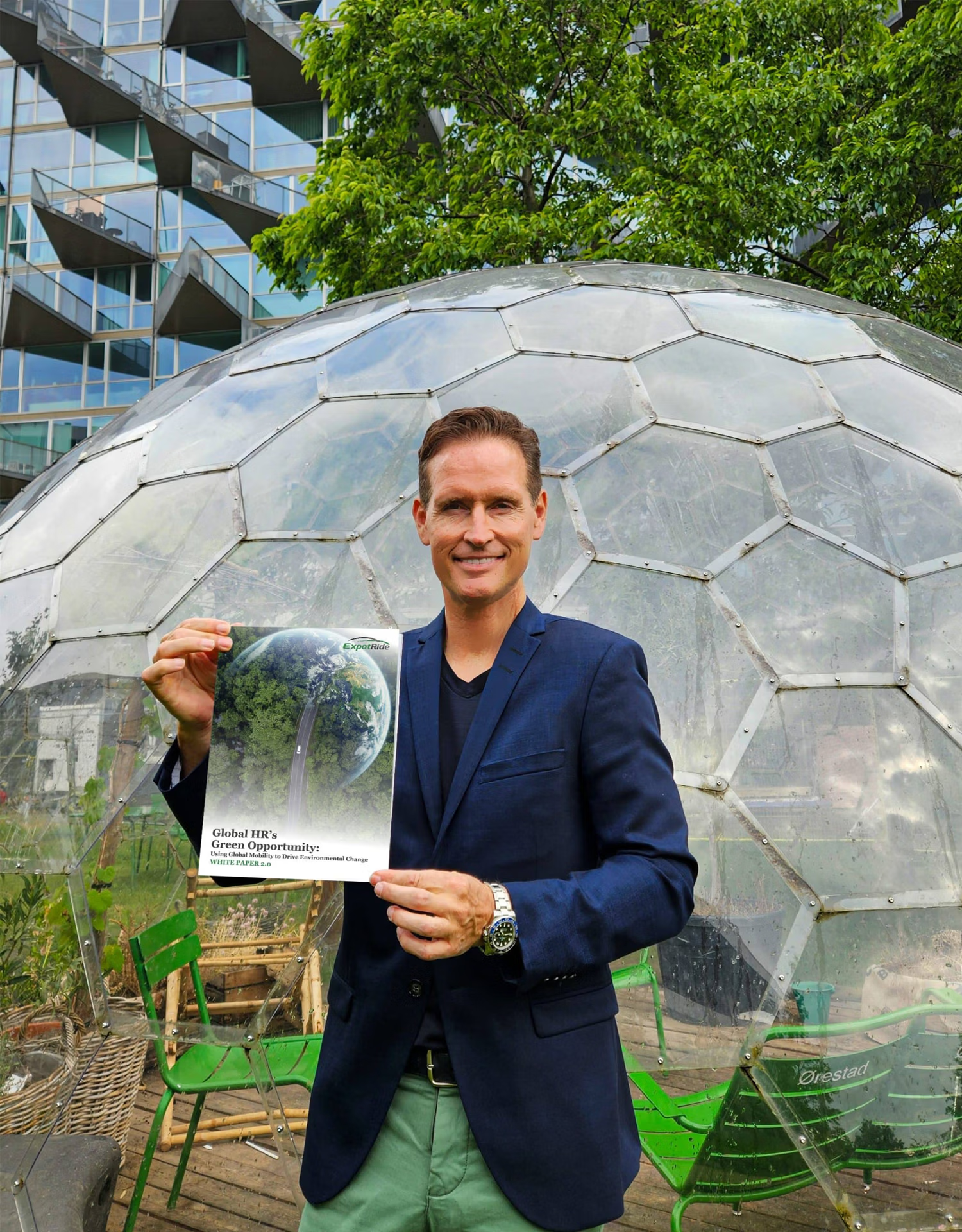
1. White Paper 2.0 – Global HR’s Green Opportunity: Using Global Mobility to Drive Environmental Change
Image credits:
1. Photo by Ross Findon on Unsplash
2. Photo by Javier Allegue Barros on Unsplash



.svg)


