.svg)
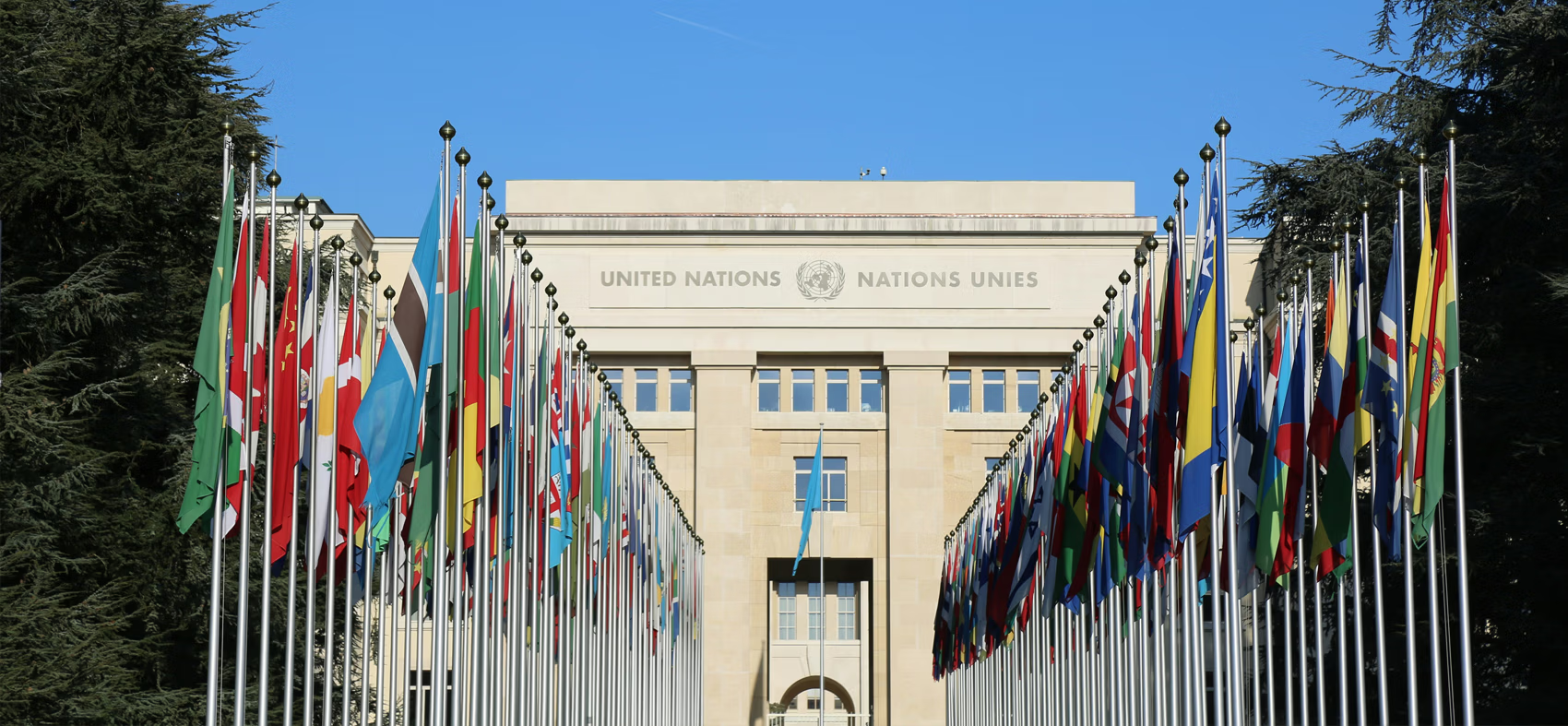
Today we would like to zoom into yet another of many abbreviations in the realm of sustainability – UN SDGs. The United Nations Sustainable Development Goals were adopted in 2015 as part of the 2030 Agenda for Sustainable Development and were created to address a broad range of global challenges. From climate change, inequality, poverty, peace and other crucial areas of sustainable societal wellbeing. The agenda was created with inclusivity in mind, applicable to all nations, emphasizing the need for having a joint plan to coordinate and drive collective action towards sustainable development.
The United Nations Sustainable Development Goals came as a logical successor to an agenda called Millennium Development Goals which, established in 2000. The “Millennium Agenda” was focusing on 8 goals originally, addressing poverty and hunger, environmental degradation, illiteracy and education, maternal health and child mortality, gender equality, HIV and other diseases and the partnership on fighting these challenges. The plan was to achieve the goals by 2015 but as the date was approaching and despite certain progression, many challenges persisted. In 2012 in the Conference in Rio de Janeiro, the conversations among UN representatives resulted in a new document “The Future We Want,” which set up a base for the creation of an updated set of goals addressing a broader range of sustainable development issues. The Open working group was set up and after a long time of extensive consultations with governments, businesses and citizens globally, trying to consider different perspectives of the stakeholders involved, 17 goals and 169 targets were drafted. In 2015 the 2030 Agenda for Sustainable Development was adopted by 193 United Nations Member States, with its 17 Sustainable Development Goals (SDGs) at the heart of it, representing an urgent call to action for all developed as well as developing countries, to work together. (1)
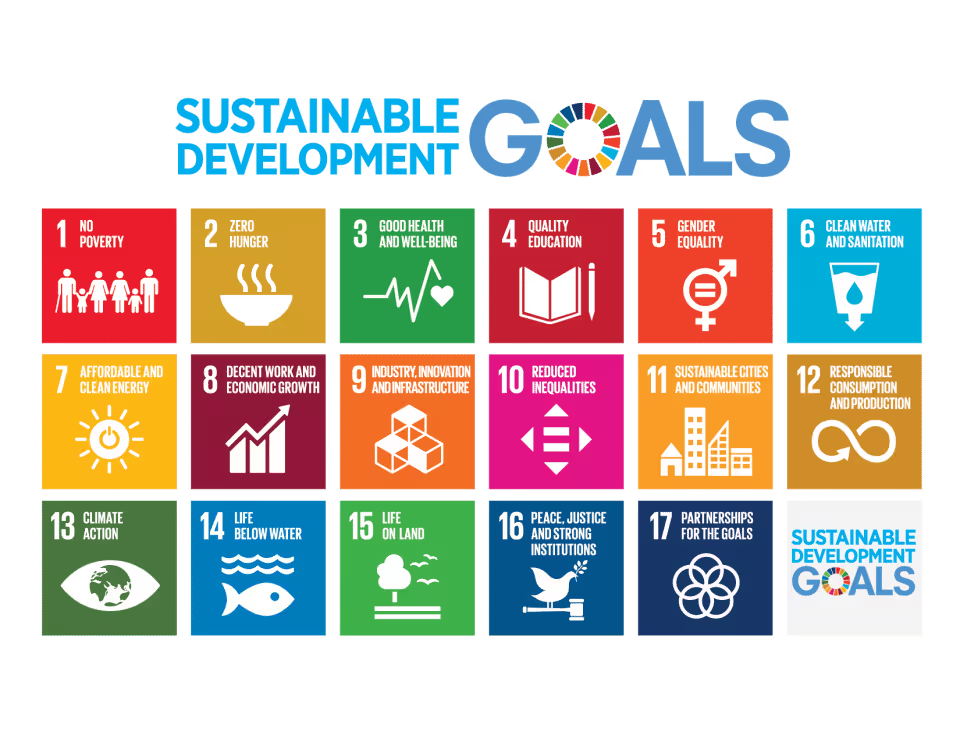
The goals represent the key areas for sustainable development from economic, social and environmental perspectives, including indicators to monitor its progress. According to the 2024 Sustainable Development Goals Report nearly half of the 17 targets have made minimal or moderate progress, while more than one-third have stagnated or reversed since their adoption in 2015. Some of the reported reasons for the failing compliance are COVID-19, the conflicts and geopolitical tensions, climate events etc. On one hand we talk about compliance but what does it really mean? It means that in 2022, there were additional 23 million people forced into extreme poverty by the course of these events, and over 100 million more were hungry than in 2019. Not to mention the number of civilian deaths in armed conflicts which also increased in the last 2 years. Also last year has been reported as the warmest year on record. (2)
Synergies and trade-offs
When we look again at all the 17 goals, their relations and how they are connected, it suggests certain synergies but also trade-offs. If we want to collectively fight poverty on a global level (SDG1) it comes down to improving the accessibility of a quality education (SDG4), to all genders (SDG 5) and inclusively (SDG10). But it was also found that reducing poverty is linked to accessibility to Clean Water and Sanitation (SDG6) and progress of Good health and wellbeing (SDG3). In other words, improving certain areas brings together a positive impact in other areas.
On the other hand, e.g. the Responsible consumption and production (SDG12) seems as a big trade-off as improving one SDG negatively affects another SDG. The trade-offs occur, where the SDGs are focused on economic growth (3) which often results in gaining one well-being aspect at the expense of environmental sustainability. The given example shows the trade-off between deforestation and increasing food production. Deforestation represents a threat to the environment but expanding food production is also vital for the well-being of society. Additionally, there is a global dis-balance in where the synergies and trade-offs can be found, with synergies mainly observed in developed countries and developing countries mainly struggling with the trade-offs. (4)
UN SDGs on a corporate level
Certain actions cannot be decided on an individual level, but an individual or corporate responsibility, cooperation and aligned strategies are important steps towards the greater impact and sustainable development. The UN SDGs started calling for accountability and action on businesses to contribute when it has not yet been a mainstream focus. And although many of them started aligning their business activities with the SDGs it is hard to define the real extent of the impact of their engagement. Based on publicly available information, a study benchmarked the engagement of the Fortune Global Top 500 corporations with the SDGs between November 2019, and February 2020. And eventhough 304 out of 500 corporations presented relevant content on their websites, almost 33% of them tried to match their already existing business activities with the SDGs instead of implementing new initiatives. (5)
Who are businesses really responsible to? Their customers? Shareholders? Employees? We would argue that it is none of the above. Fundamentally, businesses are responsible to their resource base. Without a healthy environment, there are no shareholders, no employees, no customers, and no business.
Yvon Chouinard
One Framework to rule them all
With the ESG framework in the spotlight and a strong emphasis on criteria for evaluating overall sustainability of commercial entities, we might see many of the ESG principles overlapping the UN SDGs goals, when it comes to responsible business practices. Aligning the ESG criteria with UN SDGs might drive more coherent and impactful sustainability efforts within the companies, however several challenges shall be addressed. The reporting framework and development of standardized metrics, which will be widely adopted and accepted is crucial. If we need to reach certain goals globally, we all need to know how to get there, what on and how we will be measured and what implication it will have for business as well as society. Without consistent, unified and comprehensive sustainability reporting which will be accepted by the industry (or the legal authorities) but also enforced respectively, the accountability but also relevance will be questionable.

Sources:
1. UN
2. UN
3. AGU
4. Earth.org
Image credits:
1. Photo by Salya T on Unsplash
2. Photo by Larm Rmah on Unsplash
3. SDG Illustration by United Nations



.svg)


