.svg)
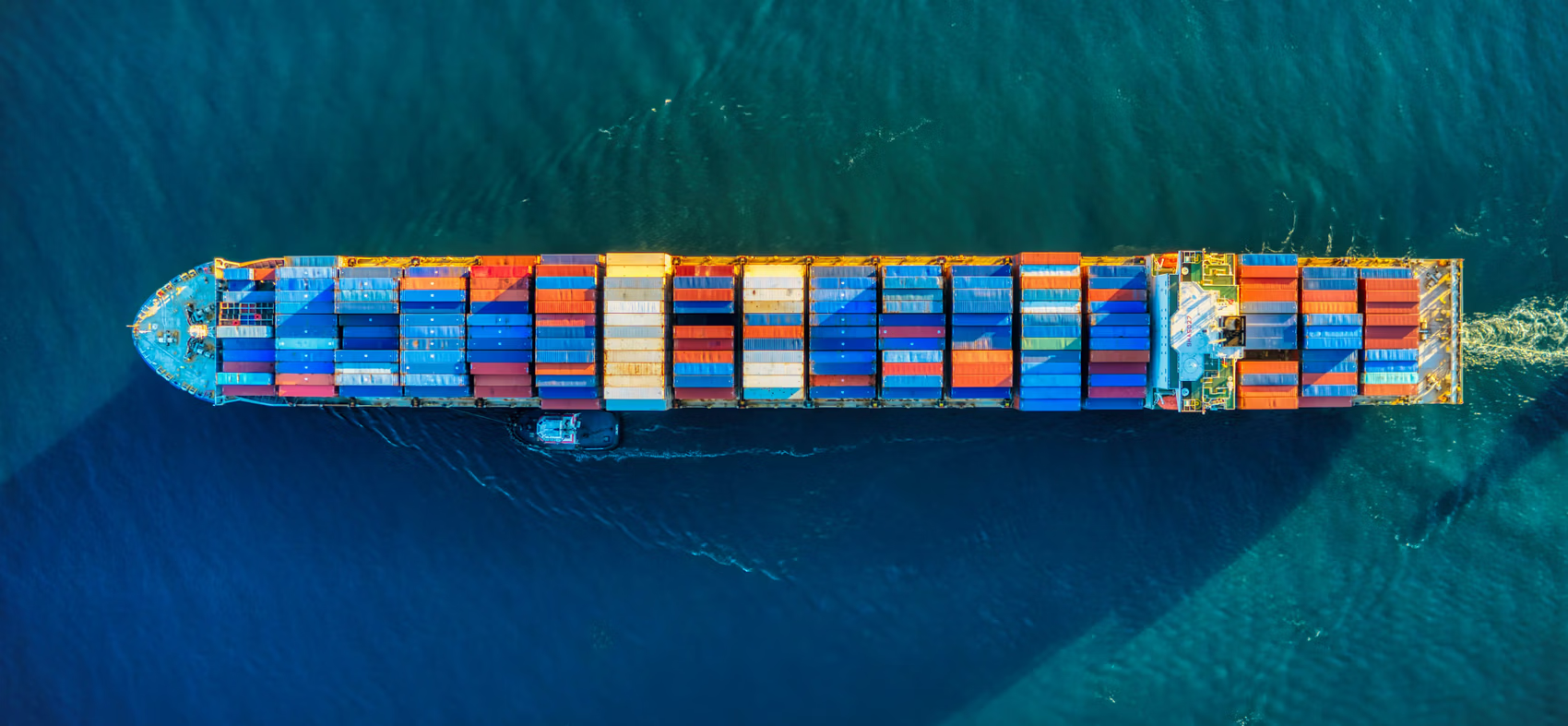
Transportation based on fossil fuels has an indisputable impact on our environment contributing to air pollution, greenhouse gas emissions, and climate change. Looking at the picture from a broader perspective, the effects are both immediate and long-lasting. Fossil fuel combustion in planes, vessels, trucks, and light vehicles releases not only carbon dioxide (CO2) but also other harmful pollutants into the atmosphere. These emissions intensify global warming but also pose severe health risks to human populations.
Even though we may not always notice the effects straight away, pollution is one of the negative externalities we might. Remember COVID-19. The world did not stop spinning but many of the daily activities were interrupted. Industrial activity, international travel and heavy traffic were stopped. Consider the case of Jalandhar, India. For the first time in decades, the residents of this city could see the Himalayas, a sight which was previously hidden behind a thick cloud of pollution. (1)
According to the United Nations, transportation is one of the most significant global contributors to greenhouse gas emissions. And when it comes to international talent relocation, air and sea freight is where we often direct our attention.
Air International Shipping
Land, air, and sea transportation accounted for approximately 8 billion metric tons of CO2 emissions in 2022, constituting about 14% of global greenhouse gas (GHG) emissions that year. (2) With transportation being the second-largest source of emissions worldwide, international aviation emissions alone more than doubled between 1990 and 2019, representing roughly 6% of global transportation CO2 emissions in 2022. International shipping, medium-weight, and heavy-weight freight vehicles contributed 35% of global CO2 emissions.
No doubt reducing the carbon footprint of transportation, especially for international air and sea freight for corporate relocations, presents significant challenges. For instance, opting for air freight or sea freight each carries its own environmental implications and can significantly influence the overall carbon footprint. Air freight, while faster, tends to have a higher carbon footprint compared to sea freight, which, although slower, might be more fuel-efficient.
The International Air Transport Association (IATA) attention is directed to the development and use of sustainable aviation fuel (SAF). Based on their analysis it has potential to reduce the CO2 emissions from commercial aviation by 80% and it can be produced from various sources, from waste oil, green and municipal waste, or non-food crops. (3) When it comes to commercialization of SAF, the aim of the US government is to achieve at least a 50% reduction in GHG lifecycle emissions compared to standard fuel by 2030. (4) EU goes in a similar direction. In October 2023 the EU adopted the ReFuel Fit for 55 legislative packages with its legally binding targets related to all sectors, including aviation as well. (5)
The environmental airline of the year 2023 title was awarded to Etihad airline. “The airline has been coordinating to achieve a 20% reduction in emissions intensity in its passenger fleet by 2025, cut 2019 net emissions by 50 per cent by 2035, and reach net-zero emissions by 2050.” (6)

Sea International Shipping
The International Maritime Organization (IMO) presented its 2023 IMO GHG Strategy which envisions reducing CO2 emissions per transport work by at least 40% on average by the end of this decade. The way of achieving that might be through operational efficiencies, incentivization but also via biofuels, with potential for hybrid, hydrogen, methanol, ammonia, and other types with new types of engines compatible with the new fuels being under development. (7)(8).
The outlook for sustainable fuels and strategies outlined seems promising, there is still way to go to make the actions “greener.” In the meantime, the consignments consolidation and transportation management optimization are the low hanging fruit to start with. With the use of technology and data centered approach, companies can deploy digital twins to simulate port operations of integrated connections and spot potential inefficiencies or areas for improvement. So, it is not an issue of technology. It is an issue of its availability and price.
In conclusion, the impact of global transportation on the environment is substantial, but so are the opportunities for positive change. When there is no availability for a more sustainable solution, there are still other options which help decrease the relocation’s overall carbon footprint. What are these? The daily habits and seemingly trivial things which might seem inconsiderable in the short run but can “offset” the whole return flight in a year or two. So, by integrating sustainability into every phase of the relocation process, we can reduce emissions, improve air quality, and contribute to a more sustainable future. The choices made today will shape the world of tomorrow, making it imperative to act with foresight and responsibility.

Sources:
1. CNN
2. Statista
3. IATA_1
5. IATA_2
7. International Maritime Organization
Image credits:
1. Photo by VentiViews on Unsplash
2. Photo by tawatchai07 on Freepik
3. Photo by Leio McLaren on Unsplash



.svg)


