.svg)

The transition from internal combustion engine vehicles to electric vehicles (EVs) is accelerating worldwide, driven by technological advancements, environmental concerns, and government policies aimed at reducing carbon emissions. This transition is not only reshaping the automotive landscape but also the global mobility sector as a whole. Businesses involved in global talent mobility, international relocations, and expatriate assignments are increasingly considering EV readiness and infrastructure as a key factor in destination planning. With employees relocating internationally, the availability and reliability of EV infrastructure play a crucial role in ensuring smooth adaptation in new locations.
According to the International Energy Agency (IEA), there were over 16.5 million electric vehicles on the roads at the end of 2021, up from just 2 million in 2016 (1). As time goes on, the global EV market share is growing, not only due to policies support and sustainability incentives, but also thanks to increased availability of models, decreasing prices as well as increasing driving ranges and infrastructure. This consistent growth trajectory indicates that EV adoption is not just a trend, but a long-term transformation of the transportation sector. And three markets have been taking a leap in EV car adoption – China, EU and USA. China’s subsidies of their automotive sector with focus on EV deployment and quickly developing infrastructure is making China an EV “superpower” (2). China accounted for approximately 60% of global EV sales in 2022. Europe is the second-largest market for EVs, with over 2.7 million electric cars sold in 2022. (3) Norway leads the continent in EV penetration, where electric vehicles accounted for nearly 80% of all new car sales in 2022. (4) Germany, Netherlands, the UK, and France are also strong contributors, driven by strong sustainable policies and subsidies. United States with sales surpassing 1 million units in 2022. California remains the leader, accounting for over 40% of U.S. EV sales due to strong state incentives and a well-established charging network.
Shall hybrids and EVs replace the conventional combustion engine vehicles, the charging infrastructure would also need to upgrade accordingly to provide the same level of accessibility and convenience. This refers to private as well as public infrastructure, especially for any dense areas where the availability of the infrastructure is a crucial enabler of further EV adoption. As per the International environmental agency, at the end of 2022, there were 2.7million public charging stations globally with almost a million of them being installed during 2022. (2) And the network keeps growing.
China leads the world in charging infrastructure again, with over 1.8 million public chargers as of 2022. (5) The Chinese government as well as private companies have invested heavily in expanding charging networks across cities and highways. Europe had over 574,000 public charging points by the end of 2022, with countries like the Netherlands, Germany, UK, and France taking the lead. (6) The U.S. had around 140,000 public chargers in 2022, with a notable concentration in urban centers and along major highways. (7) Employees moving to countries with robust EV networks like EU, US, AUS, China etc. can easily transition their personal transport needs without significant disruption. In contrast, mobility managers sending assignees to regions with less-developed infrastructure shall provide additional guidance and support. This can include insights into car rental services, availability of hybrid vehicles, and even company-sponsored charging solutions. Also as charging infrastructure continues to expand globally, the challenges associated with these transitions will steadily diminish, making EVs a practical and appealing choice for relocated professionals.
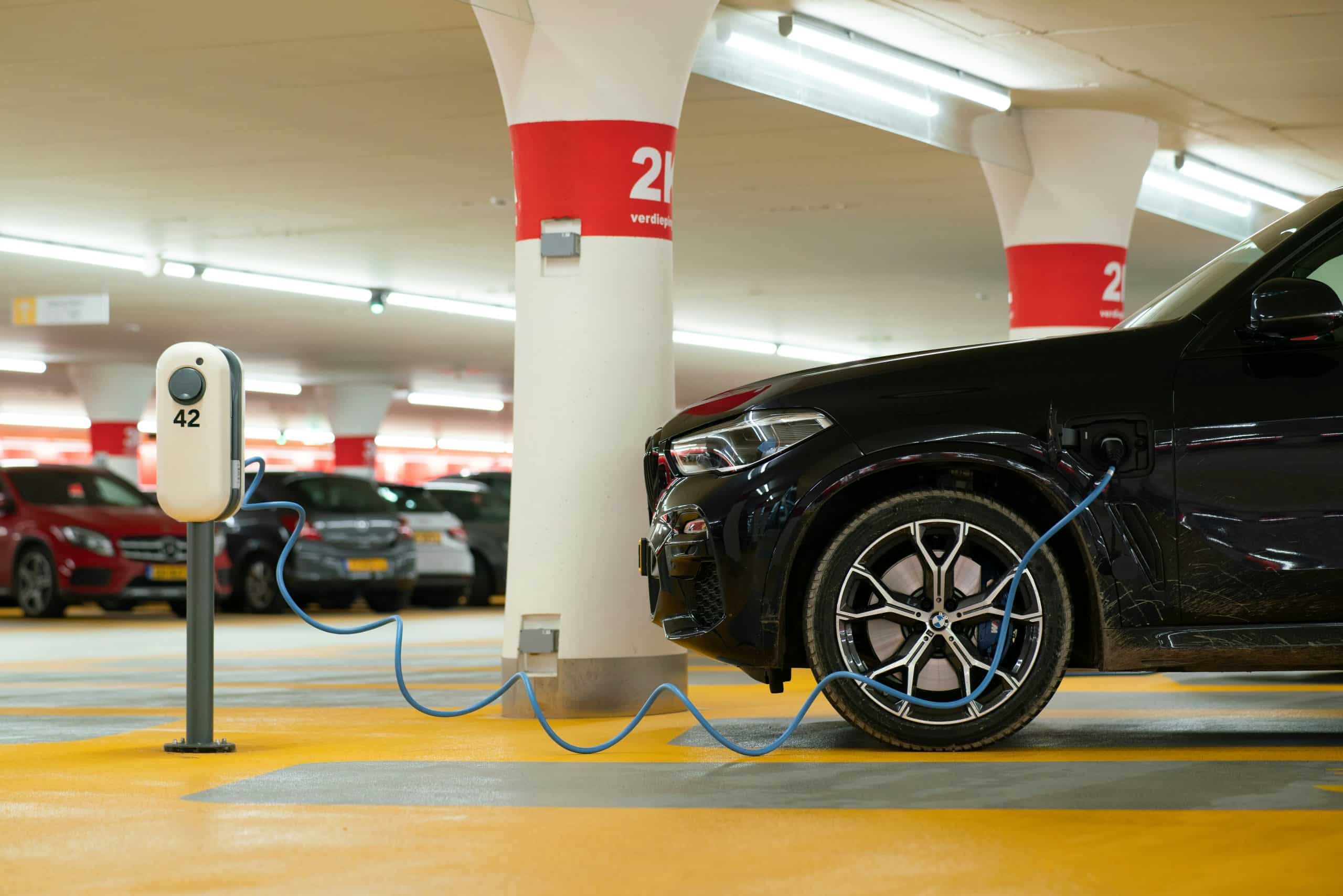
When talking about charging stations, we must also distinguish between diverse types of chargers. Slow Chargers provide a low-speed charge using a standard wall outlet, taking up to 24 hours for a full charge and are usually used in home outlets. Fast Chargers are common in public places and residential areas and can fully charge a vehicle in 4-8 hours. DC Fast Chargers or so-called Superchargers can be found along highways and in high-traffic areas and can deliver 80% of a charge in around 30 minutes. (8) Each type of charger pulls certain power from the grid however superchargers can be challenging especially if multiple vehicles are being charged simultaneously. These cases can create local peak load issues, which might result in a need to upgrade transformers or the grid connections to strengthen its capabilities. However, the infrastructure upgrade is a complex and heavy investment step. E.g., the deployment of charging stations is driven by private companies (such as Tesla) with limited public sector involvement. More collaboration and alignment between governmental bodies, private companies and utility companies would be needed to find optimal solution fitting the market requirements and cost perspective.
Infrastructure upgrade and its overall readiness will be most likely the key topic for further discussions when considering further steps towards EV mass adoption. Besides the grid readiness, another challenge remaining to ensure more seamless charging experience for EV users is the interoperability and standardization of connector types across charging networks. While regions like Europe have adopted the CCS (Combined Charging System) as the standard, other regions still struggle with multiple connector types and payment systems. Every transformation has its challenges, but it is clear the car market will be penetrated with more electric vehicles in the future.
“Although electric vehicles took roughly six years to get from 1% to 10% of global market share, it will take just six more years to reach 80% adoption, an RMI report says.” (9)
To support this development, the number of public charging stations will need to increase multiple times to ensure its smooth operation. Moreover, more renewable energy should be integrated into the charging ecosystem, let it be solar or wind to minimize the carbon footprint. And given the global push toward renewables, integrating clean energy into charging infrastructure is not just feasible but increasingly likely, making EV adoption even more beneficial for the environment. Technological development and innovation, smart charging and grid optimization solutions are also being developed further to optimize the charging time, reduce the load of the grid and thus enable more efficient ecosystem operation.
It is clear the next upcoming years will require significant investment, innovation, and collaboration between public and private sectors to address infrastructure gaps, standardization issues, grid impacts etc. to enable a seamless transition to a fully electrified transportation system. However, with the ongoing progress and strong momentum, the road ahead for EVs is undeniably positive, ensuring more sustainable future for global mobility. And as global mobility professionals look ahead, integrating electromobility into their strategic planning and relocation support will be essential in ensuring that international assignments and relocations remain seamless and continuously more sustainable.

Sources:
1. IEA
2. IEA
3. Canalys
5. Statista
7. Statista
8. Vanarama
Image credits:
1. Photo by Zac Ong on Unsplash
2. Photo by Precious Madubuike on Unsplash
3. Photo by Michael Fousert on Unsplash

.avif)
.avif)
.svg)


