.svg)
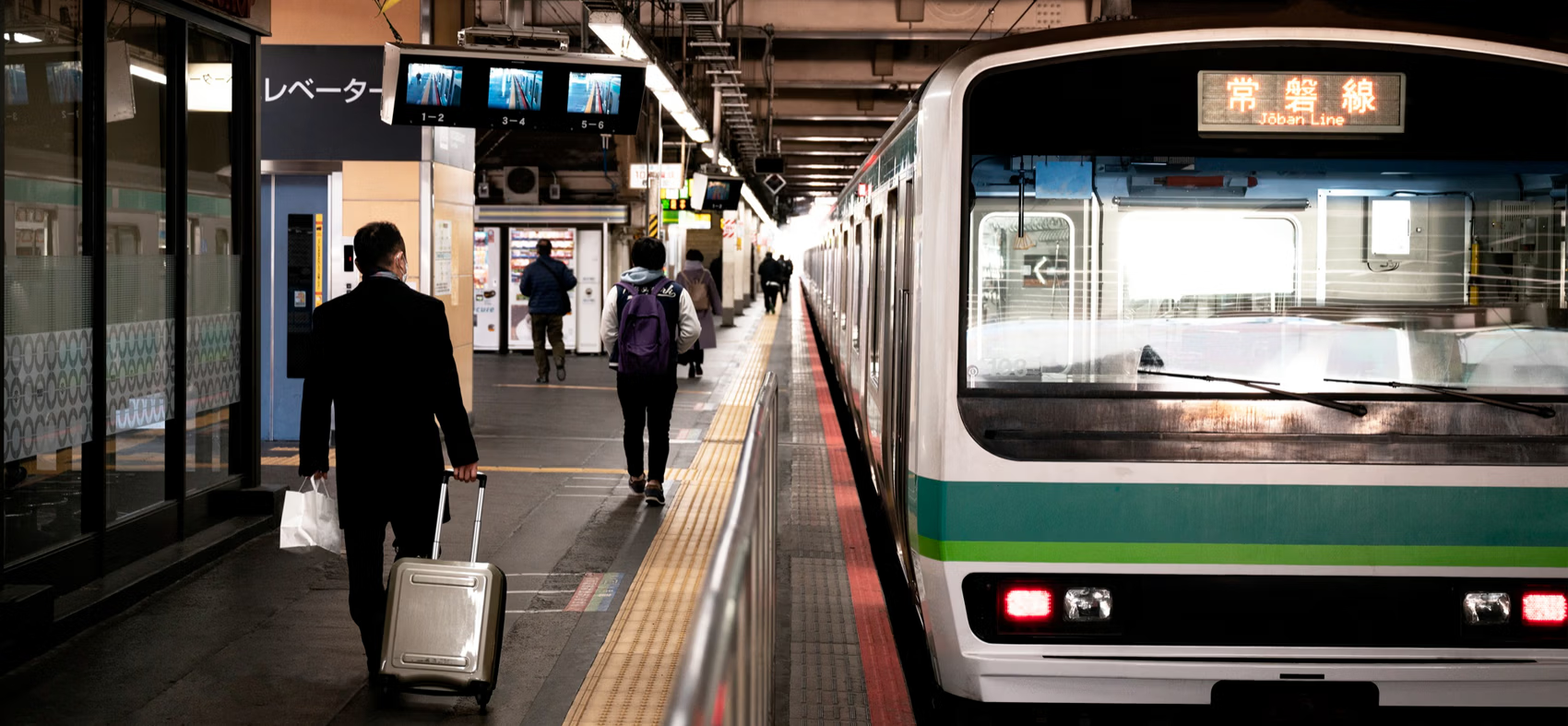
Rachel, a marketing manager from the United States, is relocating to Tokyo, Japan, for a two-year assignment. She considered herself pretty environmentally conscious, and at home, she recycled regularly, avoided single-use plastic when she could, and was conscious about her water use. After settling in Japan, she realized that her well-intentioned habits didn’t quite translate to her new environment. Her knowledge and practices were good back home, but here they were inadequate. The recycling rules were far more detailed, plastic packaging was everywhere and the public transport system seemed overwhelming. What followed was a period of learning, trial and error, and confusion. Over time, Rachel adapted to the new cultural norm by observing, asking questions, and learning from her missteps.
Rachel’s experiences highlight a common challenge that many people face when relocating. They have to navigate a new context and learn about do’s and don’ts in their new place. This article explores Rachel’s journey as a case study, illustrating the importance of incorporating sustainability into Cultural Awareness Training.
Challenge: Navigating Japan’s Recycling System
Rachel’s first cultural difference already happened immediately when she arrived at the airport. Feeling a bit hungry, she grabbed a sandwich from a convenience store before heading outside to wait for her chauffeur. After finishing her sandwich, she walked to a nearby vending machine with a bin to throw away her trash. But there was nowhere to put it. The bin had two round openings, where both of them were labeled with some Japanese writing that she could not read. She was unsure where to put it, so she decided to put it in the hole where she could see some plastic bottles peeking out. At this point, Rachel was unaware of the Japanese custom of bringing home your trash, as there almost are no public trash cans available. Not thinking further about it, she arrived at her apartment, and in the kitchen, she found several bins with labels in Japanese, however, there was no English guidance on what belonged in each. She felt overwhelmed and disoriented but decided that was a task for another day. Rachel’s initial encounter highlights a common challenge for those relocating to a new country: adjusting to unfamiliar systems and practices.
In Japan, recycling isn’t a simple matter, it involves detailed sorting into categories such as burnable waste, non-burnable waste, plastics, paper, metals, and even specific types of glass. Recycling is not only a sustainable initiative, but a legal requirement. Failure to follow the rules can lead to both legal and social consequences (1). Each neighborhood in Japan has its own specific waste schedule, and the rules can vary from one area to another. If waste is not sorted correctly, it may be left uncollected.
As her new job started and her schedule became increasingly busy, Rachel forgot about the waste-sorting system. She translated the labels, and thought that was good enough. Occasionally, her trash was sorted incorrectly and therefore rejected by the waste collectors. The neighbors started to notice, as their trash wasn’t collected either. One day, when she was taking the trash out, her neighbor pointed to the bottle cap and the label of some of the plastic bottles, and showed that they needed to be separated from the bottle itself. Rachel felt a bit embarrassed by the correction, but thanked the neighbor for the help and clarification. In Japan, values such as communal harmony are very important. People who do not follow community standards may face disapproval from those around them. To address this issue and not repeat this mistake, Rachel decided to participate in a local evening for foreigners, where they would learn more about waste management in their city.
Struggling with Single-Use Plastics
Despite Japan’s strict recycling system, Rachel encountered another unexpected challenge: the use of single-use plastics. From individually wrapped fruits to excessive packaging for everyday items, Japan’s reliance on plastic surprised her, especially given the country’s reputation for environmental consciousness. Although the plastic waste was seemingly meticulously sorted and recycled, the volume of packaging felt overwhelming – especially with the scarcity of trash cans available in public spaces.
Rachel couldn’t reconcile what she perceived as excessive packaging with the country’s highly organized recycling practices. To better understand, she turned to some of her local colleagues. She learned that the emphasis on packaging is rooted in cultural values such as cleanliness and presentation. They also introduced her to the concept of “omiyage,” a Japanese custom where travelers bring small gifts or snacks back for colleagues, friends, and family. This custom often requires individually wrapped items to maintain freshness and provide an appealing presentation.
Understanding this cultural perspective helped Rachel approach the issue more empathetically. She found some easy-to-implement alternatives that were a bit more sustainable. She would bring her own reusable bags to the convenience stores and supermarkets, and instead of buying individually wrapped snacks, she tried to find ones that were in a bigger bag. This adjustment not only reduced Rachel’s plastic consumption but also aligned her habits with the local culture, making her more aware of the balance between tradition and sustainability in Japan.
Adapting to Japan’s Public Transport System
Another aspect that was difficult for Rachel, in the beginning, was to embrace Japan’s public transportation system. Coming from a car-centric lifestyle in the U.S., the idea of navigating the public transport system seemed intimidating. In the beginning, she drove to work every day, but the high parking fees and hours spent in traffic pushed her to reconsider and give the train a go. She was a bit scared in the beginning, but decided that worst case if she got lost, she would just take a taxi back. Rachel quickly realized that Japan’s public transportation was not only more sustainable than driving but also more efficient. The trains were punctual, and she could easily get anywhere, without the hassle of searching for parking. So while the initial learning curve was a bit challenging, – she did get lost a few times – she quickly learned and ended up enjoying her daily commute, where she could relax, listen to a podcast, or simply unwind after a busy day. Additionally, she found that using public transportation helped her feel more connected to the locals. Instead of being alone in a car, she shared her commute with locals, where she could observe Japanese customs and everyday life. Over time, this shift not only aligned her habits with sustainable practices but also deepened her understanding of and connection to the local culture.
Adapting to Local Practices
After a few months, Rachel had successfully learned how to sort her waste, reduce her use of single-use plastics, and navigate the public transport system. With the support of a local waste initiative for foreigners, guidance from her neighbors and colleagues, and her own determination to learn, Rachel adjusted to life in Japan. She built stronger connections with her neighbors and colleagues. However, the journey wasn’t without its challenges. Rachel faced significant frustration and embarrassment in the beginning as she struggled to understand and implement the local practices. A sustainability component in the Cultural Awareness Program that Rachel participated in could have provided her with practical solutions and knowledge, making her transition smoother and more enjoyable.
Key points:
Rachel’s experience emphasizes several key takeaways:
→ The importance of incorporating sustainability into cultural awareness training
→ Understanding the cultural values behind practices
→ Practical support can ease relocation challenges
Rachel’s journey highlights the importance of combining Cultural Awareness Training with Sustainability Training. Combining these can create smoother and easier transitions for assignees, fostering positive relationships, better cultural understanding, and sustainable habits. By recognizing and respecting local norms, individuals can not only prevent misunderstandings but also contribute meaningfully to their new communities.
Do you have an experience where sustainability and cultural awareness played a key role in relocation? Share your thoughts on sustainability@expatride.com, we’d love to hear your experiences!
Sources:
Image credits:
1. Photo by freepik on FreePik
2. Photo by Chris Chan on Unsplash


.svg)


