.svg)

As organizations expand globally, sustainability has become an essential aspect of responsible business operations. While many companies set ambitious sustainability targets, these commitments often struggle to reach practical implementation. And Global Mobility industry is not an exception. Employee relocations, international assignments, and business travel significantly impact the environment, making it crucial for companies to integrate sustainability into their mobility strategies. However, sustainability is not just about reducing carbon footprints – it also involves fostering a mindset where employees understand their role in a larger ecosystem, balancing business needs with environmental and social responsibility. This is where cultural awareness and sustainability training come into play, ensuring that employees moving across borders are not only prepared for new cultural environments but also equipped with the knowledge to make responsible and sustainable choices.
Education as the first step to understanding
Educating the assignees on sustainability within the context of cultural awareness programs helps them navigate local environmental regulations, adopt sustainable living habits, and align their behaviors with both corporate and regional sustainability goals. A structured, well-designed program can ensure that sustainability becomes a natural part of their relocation journey with the potential to maintain sustainable habits even after repatriation. That is why embedding sustainability into the Global Mobility framework helps companies to empower employees to contribute meaningfully to corporate sustainability efforts while also enhancing their cultural adaptability and long-term impact on the communities they join.
As global awareness of the need for more sustainable practices increases, so does the awareness that sustainable practices are not universal. Different places have different policies, they face unique environmental challenges, and what works in one culture may not translate well to another. This is why it is crucial to understand cultural norms, as they directly influence local sustainability practices. This article kicks off another ExpatRide’s mini-series that will be exploring how Cultural Awareness Programs and Sustainability Training go hand in hand. There is a growing recognition of the importance of incorporating sustainability training into cultural awareness programs since there is no universal solution on how to incorporate sustainability into daily life. Sustainability is often seen as a set of universal principles – reduce, reuse, recycle – but the reality is much more complex. Each location has its own distinct approach, shaped by their history, religion, societal values, and economic conditions. This complexity is why it’s essential to understand how sustainability is practiced in a particular location. For assignees relocating to a new place, integrating sustainability into their cultural awareness program is more than just learning ‘global best practices’. It’s about understanding local sustainability norms and practices, fostering smoother transitions and better assignee engagement.
Why integrating a Sustainability into Cultural Awareness Program?
Relocation can be a daunting experience, as the assignee already has a full plate managing the complexities of settling into a new place. Adapting to a new location, learning about a new culture, and, in many cases, even navigating daily life in a foreign language, are all nuances of everyday life that are significant challenges on their own. The added burden of figuring out “small” practical matters, such as waste management, which apps can be used, and the best ways to get around – can quickly become a source of unnecessary stress. Integrating and highlighting sustainability into these everyday challenges not only benefits the assignee, but also reflects positively on the company’s reputation. It’s not just a win for the individual and the company; it is also a win for the environment! This is why creating a Cultural Awareness and Sustainability Training-program is so important.
Throughout this bi-weekly mini-series, we’ll investigate how cultural awareness programs can be a way to enhance sustainability, and why combining these two elements makes perfect sense. We will dive deeper into specific topics, from eco-friendly transportation to sustainable food practices. During this series, we’ll share practical scenarios and illustrative cases, to help employees and Global HR embrace sustainability as an important part of the relocation experience. Together, we’ll explore how cultural awareness and sustainability can weave together to create positive change – for individuals, companies, and most importantly for our planet and our future.
Join us when we explore and highlight how sustainability and culture are not only complementary but crucial elements in shaping a better future!
Do you know other companies in the Global Mobility industry that prioritize sustainability in their Relocation Programs? We’d love to hear about them! Share your insights with us at sustainability@expatride.com, and let’s spread the word about other Sustainability Ambassadors!
Sources:
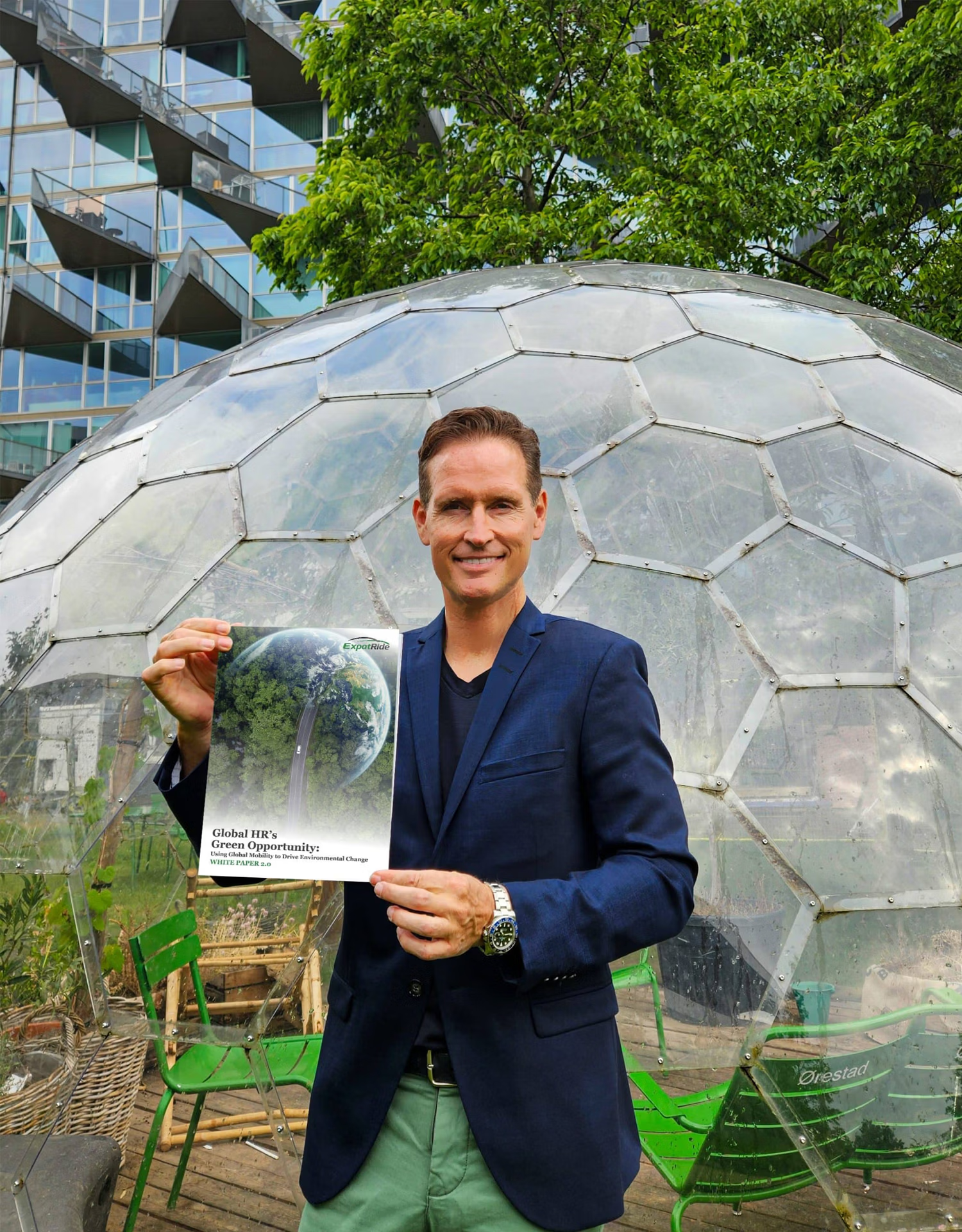
1. White Paper 2.0 – Global HR’s Green Opportunity: Using Global Mobility to Drive Environmental Change
Image credits:
1. Photo by freepik on FreePik
2. Photo by Sven Huls on Unsplash



.svg)


